

The panel from 2:00 - 3:00 pm will take place at the museum's Hibben Center for Archaeology Research, Rm 105 and online via Zoom.
Registration on our Eventbrite page here to attend in-person is not required but appreciated. However, to join us on Zoom for the 2:00 pm panel you must register here: https://bit.ly/4tt0DD6
Join us as we inaugurate our new exhibit featuring Pueblo pottery from the Maxwell Museum's collections, presented through the perspectives of twenty-five potters and knowledge holders from fourteen Pueblos."Coiling Kin: The Life of Pueblo Pottery" explores the deep connections among potters, clay, the land, and the other than human world.
At our opening reception we will feature an in-person conversation (available online via Zoom) led by lead co-curator Dr. Lea McChesney featuring five co-curators of the exhibit:
• Clarence Cruz/ Khaayay (Tewa/Ohkay Owingeh) was Assistant Professor in the Art Department at the University of New Mexico until his retirement in January 2026. He is also a traditional potter.
• Jerry Dunbar (Ysleta del Sur) is a potter and artist;
• Donna Pino (Tamaya/Santa Ana) is a potter, seamstress of traditional shirts and dresses, embroiderer of kilts, and a teacher of all;
• Cassandra Tsalate (Zuni) is a young traditional potter, who began as an apprentice and is now an educator. She grew up farming with her family, learning ancestral methods of agriculture and food sovereignty.
The panel will be followed by delicious snacks and non-alcoholic drinks, while available. The exhibit will be on view that day until 5:00 pm.
***
Coiling Kin: The Life of Pueblo Pottery, presents a comprehensive exhibit of its permanent collection explored through Pueblo artists’ perspectives. This collaboratively curated exhibit presents Pueblo perspectives on pottery informed by their guiding beliefs, communities, histories, and enduring practice of this art. Twenty-three potters from fourteen Pueblos selected 70 works from the Maxwell Museum of Anthropology’s permanent collection for its first comprehensive display. Contributions from additional Pueblo artists, photographs, and loan items facilitate reflections on the deep significance of clay in Pueblo life.
Pueblo peoples’ long habitation of the land is marked with the traces of pottery that record both their deep histories in the Southwest and current lives. Through the voices of the co-curators, this exhibition provides a multi-vocal experience of clay – a cherished offering of Mother Earth – from its raw to worked forms by means of their respectful use of it. We present the materials and laborious processes entailed in making pottery infused with potters’ deep spiritual beliefs and dedicated efforts. We intend visitors to experience clay as a medium for protection and nurturance, an embodied expression of their identity and integrity in and through time, and an enduring, distinguished art form that remains part of everyday life.
Over the course of three years, these artists visited the Maxwell Museum to review the museum’s collection and make preliminary selections; they refine their selections and discuss them on videotape; and hold small group and whole team meetings. In the second year, artists convened collectively on the UNM campus to begin developing themes and content. Later that summer museum staff and a videographer traveled to their communities to document these artists at work. A final group meeting the following year completed the exhibit’s organization and content in preparation for its design. Near constant communication facilitated a remarkably smooth process and warm, respectful relationships in this expansive effort of relational curation.
Presented in the round and with extensive use of audio-visual materials, the exhibit introduces the Pueblo artist co-curators and is organized around four themes: Pottery in Pueblo Life; The Living Ways of Pottery Teaching; Working Together, Shaping a Life: The Process of Pottery Making; and Keeping Our Culture Alive: Changing Traditions and Pottery Futures. Through this exhibit visitors will experience the embodied language of Pueblo pottery in all its complexity.
***
This exhibit is made possible by the co-sponsorship and funding of the Henry Luce Foundation, UNM College of Arts & Sciences, UNM Museum Studies, and the UNM Center for Regional Studies.
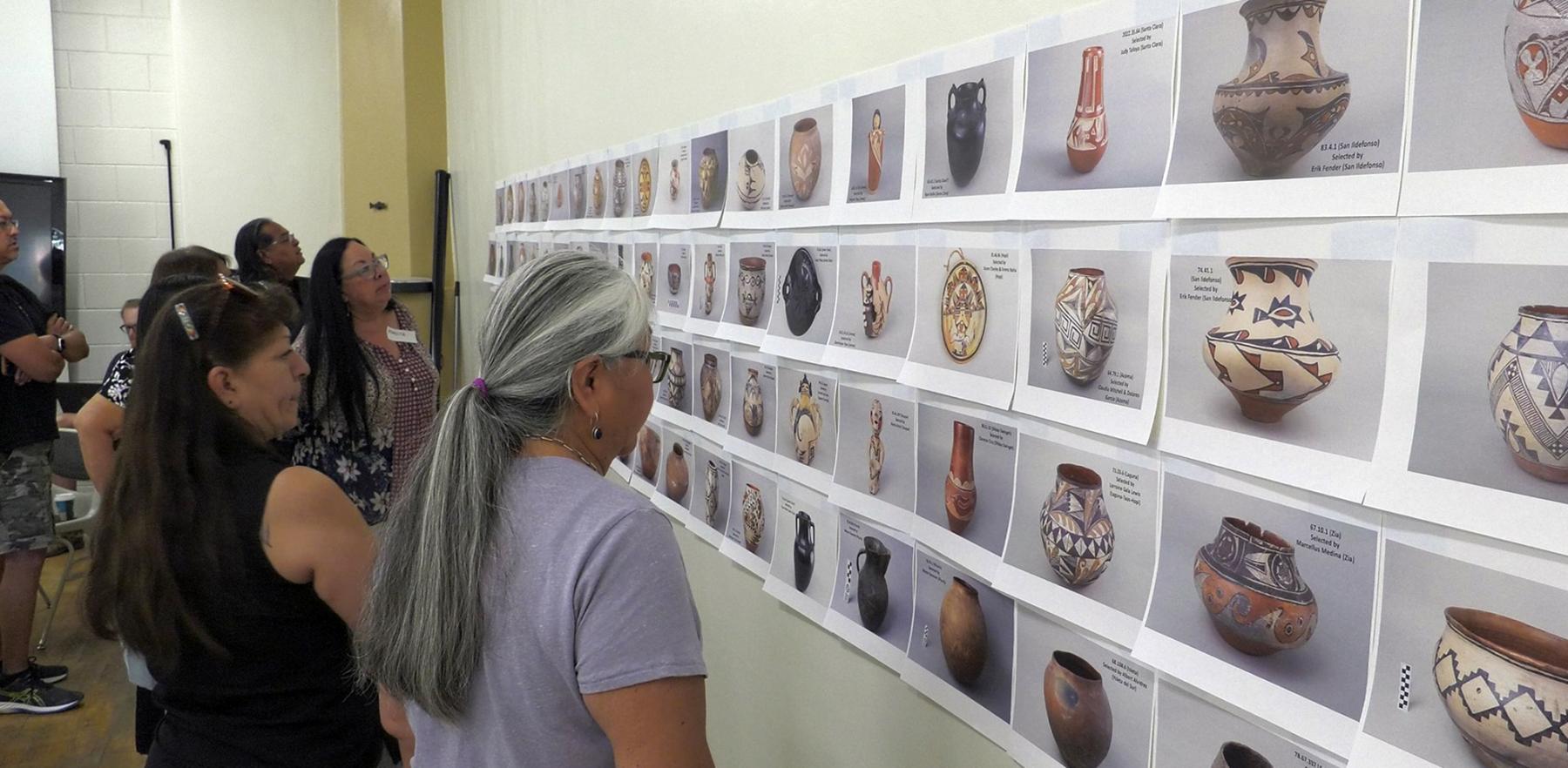
Exhibition curators reviewing the selections made for the exhibit.
Visit the Coiling Kin Exhibit Page for more information.


